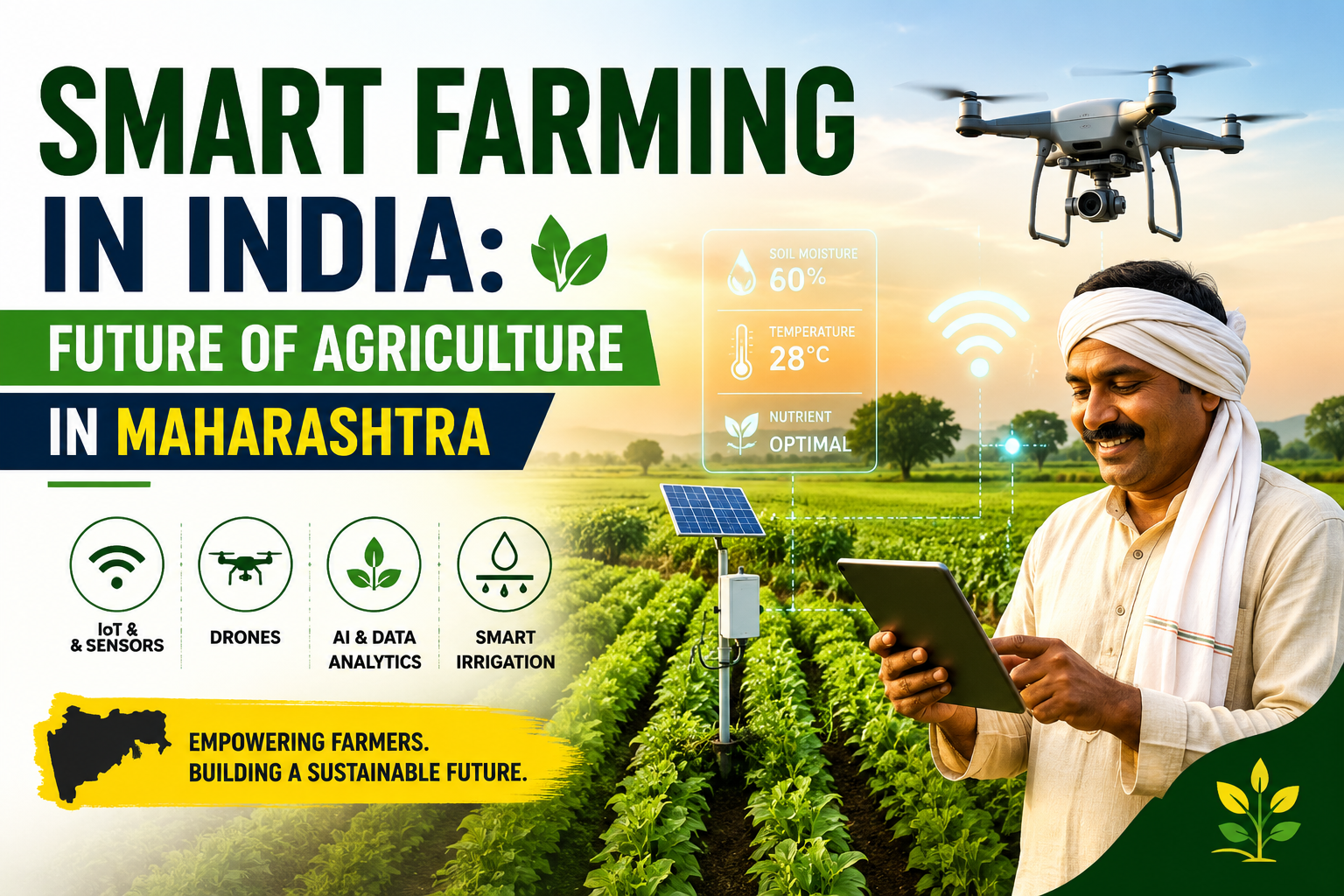
Smart Farming in India: Future of Agriculture in Maharashtra
Discover how smart farming in India is transforming agriculture in Maharashtra with AI, IoT, drones,…
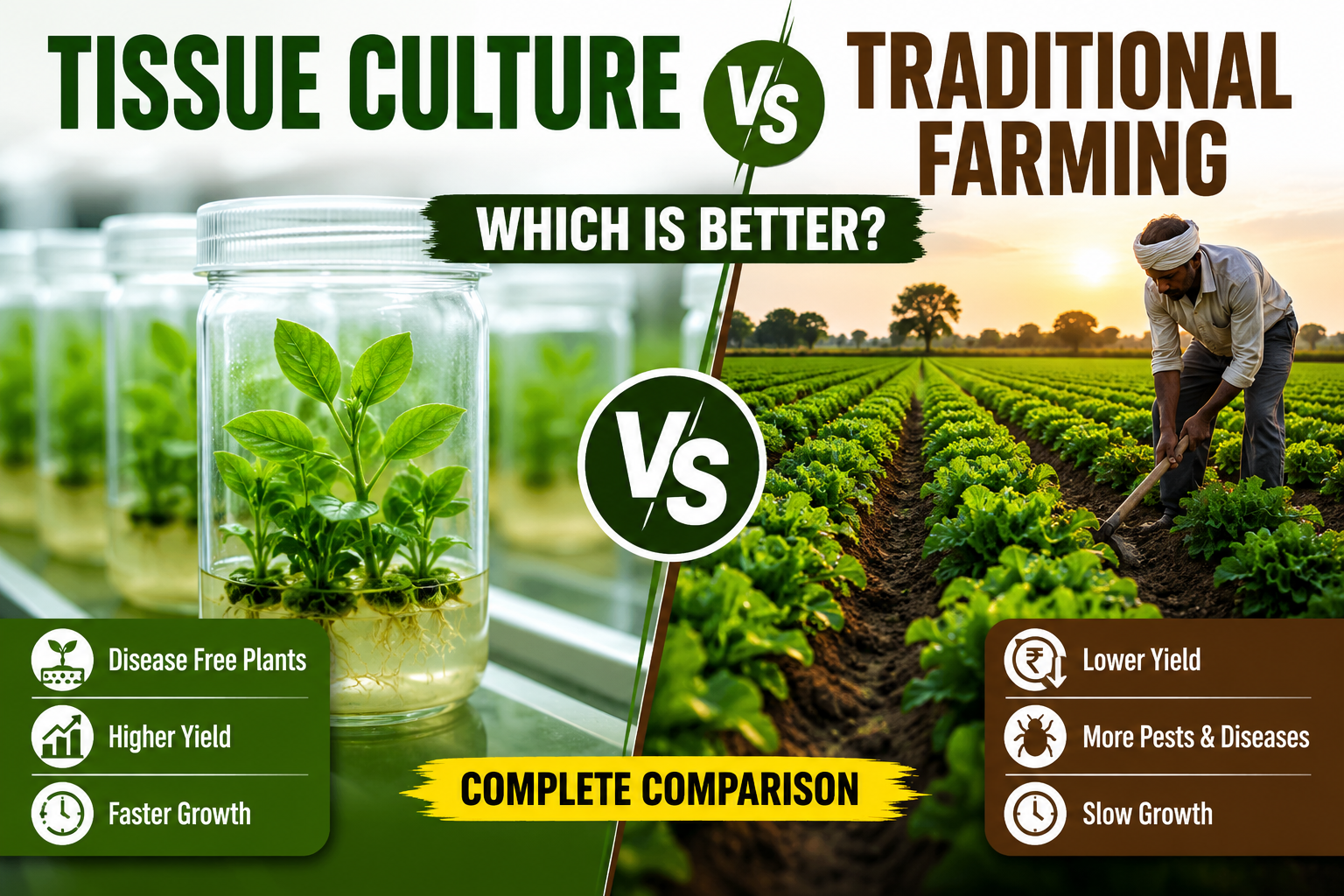
Hey there, fellow farmers and agri-enthusiasts! If you’re scratching your head over whether to stick with age-old farming methods or jump into modern techniques like tissue culture, you’re not alone. In India, where agriculture feeds millions and faces challenges like erratic monsoons, soil degradation, and pests, this debate is hotter than ever.
Today, let’s dive deep into tissue culture vs traditional farming – comparing them side by side, looking at pros, cons, real Indian examples, and what might work best for you. By the end, you’ll have a clearer picture to decide for your farm.
Traditional farming is what our grandparents and their grandparents did. It involves growing plants from seeds, suckers, tubers, or cuttings directly in the soil. Think of planting banana suckers in the field, saving potato tubers for the next season, or using natural seeds for wheat and rice.
It’s deeply connected to nature – relying on soil health, seasonal cycles, rainfall, and local knowledge passed down generations. In India, it’s the backbone of small and marginal farmers, covering vast areas of paddy, millets, pulses, and fruits.
Tissue culture, also called micropropagation, is a lab-based technique where tiny plant parts (like shoot tips or meristems) are grown in a sterile nutrient medium under controlled conditions. This produces thousands of identical, disease-free plantlets from a single elite mother plant.
It’s not new in India – commercial tissue culture started in the late 1980s, and now there are hundreds of labs producing millions of plants yearly, especially for banana, sugarcane, potato, and ornamentals.
| Aspect | Traditional Farming | Tissue Culture |
|---|---|---|
| Propagation Method | Seeds, suckers, cuttings | Lab-grown from tiny explants |
| Speed of Multiplication | Slow (season-dependent) | Very fast (thousands in months) |
| Disease Status | Often carries viruses & pathogens | Disease-free (especially virus-free) |
| Uniformity | Variable | Highly uniform plants |
| Initial Cost | Low | High (labs, media, skilled labour) |
| Yield Potential | Good, but variable | Often 30-50% higher with uniformity |
| Adaptation to Field | Naturally adapted | Needs hardening/acclimatization |
| Genetic Diversity | Higher (from seeds) | Clonal (identical, less diversity) |
1. Rapid Multiplication and Higher Yields One of the biggest wins! From a single banana plant, you can get hundreds or thousands of plantlets in a year. Traditional suckers multiply slowly.
In India, tissue culture banana plants mature faster (12-16 months vs 2-3 years for conventional), produce bigger bunches (30-45 kg vs 10-15 kg), and give higher yields – up to 40-60 tons per hectare compared to 15-20 tons traditionally. Farmers report 30-50% more income.
2. Disease-Free Plants This is a game-changer in India where banana bunchy top virus and other diseases devastate crops. Tissue culture uses meristem culture to produce virus-free plants, leading to healthier crops and less pesticide use.
3. Year-Round Production No waiting for seasons. Labs produce plants throughout the year, helping farmers plan better and meet market demand.
4. Uniformity and Quality All plants are genetically identical clones of the best mother plant. This means uniform growth, simultaneous harvesting, and easier marketing – perfect for commercial farming.
5. Conservation and Improvement Great for rare varieties, endangered species, and developing stress-tolerant plants (drought, salinity). It also supports genetic engineering for better traits.
6. Less Land and Space in Early Stages Plantlets are small and can be transported easily. Ideal for areas with shrinking farmland.
It’s not all rosy. Here are the challenges:
Traditional methods shine in many ways:
However, challenges like disease buildup in suckers, lower yields, and climate vulnerability are real.
Banana Revolution: Uttar Pradesh’s “Banana King” Ram Saran Verma switched to tissue culture in 1988 and earned massive profits. Many farmers following him report net profits of ₹2-2.5 lakh per acre.
In Karnataka and Tamil Nadu, farmers using TC bananas have seen record harvests and higher benefit-cost ratios. Government schemes and certified labs under NCS-TCP have boosted adoption.
Sugarcane and Potato: Tissue culture helps produce disease-free planting material, improving productivity in states like Maharashtra, Uttar Pradesh, and Gujarat.
Challenges in Adoption: Many small labs closed due to high costs, but government subsidies (up to 50% for labs) and private companies are helping.
It depends on your scale, crop, and goals.
In today’s India – with population pressure, climate change, and the need to double farmers’ income – tissue culture is a powerful tool, not a complete replacement.
Tissue culture is growing fast. With more low-cost protocols, automation, and government support (like subsidies for labs and quality certification), it will become more accessible. Combine it with organic practices, precision agriculture, and farmer training for sustainable results.
Tissue culture vs traditional farming isn’t about choosing one winner. Traditional farming gives us roots and resilience, while tissue culture offers speed, quality, and scale. The smartest farmers blend both – using modern science without forgetting traditional knowledge.
If you’re a farmer in Maharashtra, Uttar Pradesh, Karnataka, or anywhere in India, start small. Visit a tissue culture lab, talk to successful adopters, and see government schemes. The future of Indian agriculture looks promising when we innovate smartly.
What are your experiences with tissue culture or traditional methods?
Discover how smart farming in India is transforming agriculture in Maharashtra with AI, IoT, drones,…
Discover tissue culture vs traditional farming comparison. Pros, cons, yields, costs & real Indian success…

Increase farm yield with proven smart farming techniques. Learn how to improve crop productivity, reduce…