Smart Farming in India: Future of Agriculture in Maharashtra
Discover how smart farming in India is transforming agriculture in Maharashtra with AI, IoT, drones,…
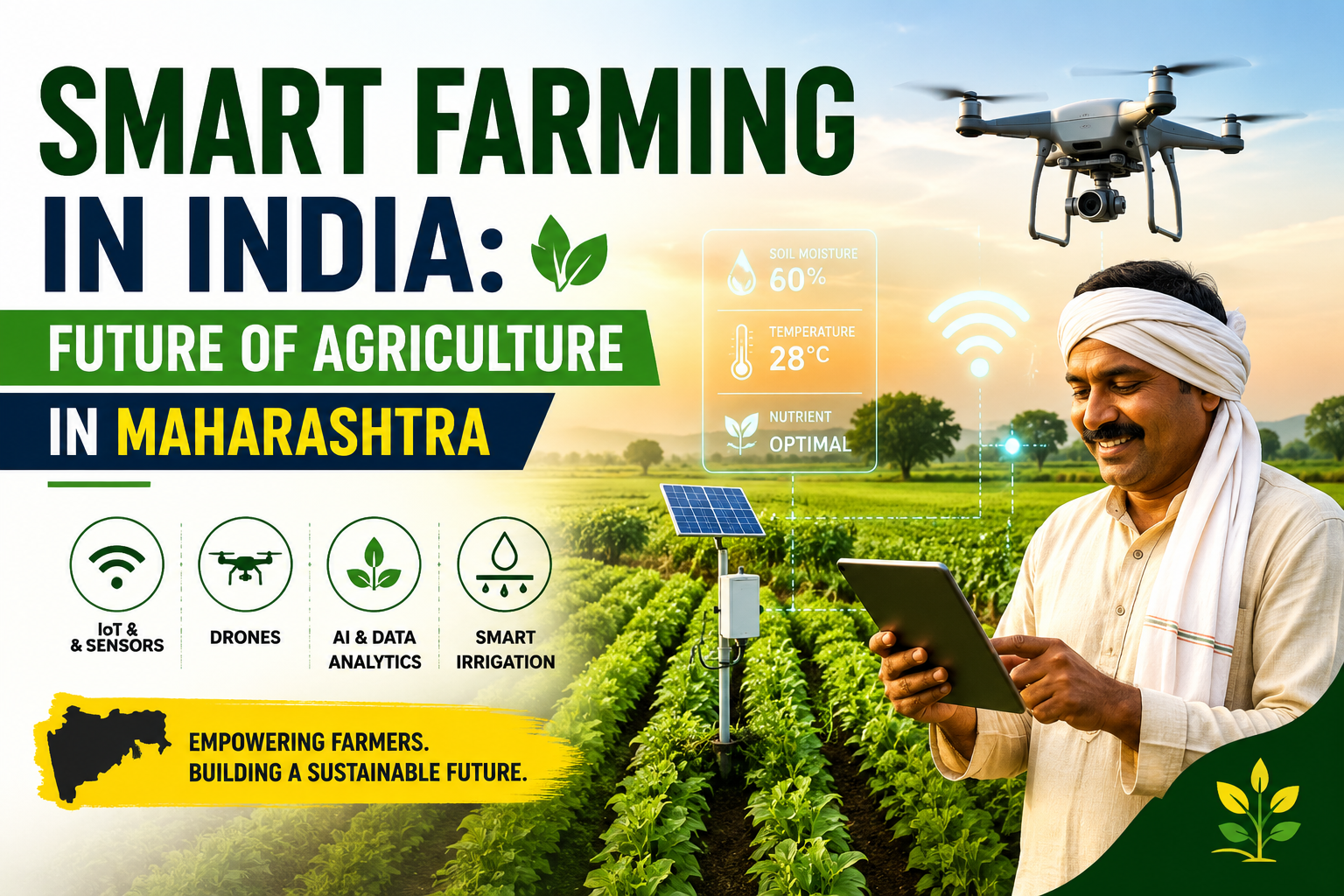
Hey friends, fellow farmers, and agri-enthusiasts from Maharashtra and across India! In a country where agriculture supports millions of families, traditional methods alone are struggling with erratic rains, rising input costs, labour shortages, and climate challenges. This is where smart farming in India is emerging as a powerful solution.
From Pune’s sugarcane fields to Vidarbha’s cotton farms and Marathwada’s drought-prone areas, technology is quietly transforming how we grow crops. In this post, we explore how smart farming in India, especially in Maharashtra, is shaping the future of agriculture with AI, drones, IoT, and data-driven decisions.
Smart farming, also known as precision agriculture or Agriculture 4.0, uses modern technologies like sensors, artificial intelligence (AI), Internet of Things (IoT), drones, satellite imagery, and mobile apps to monitor, analyse, and manage crops and livestock more efficiently.
Unlike traditional farming that relies heavily on experience and guesswork, smart farming provides real-time data on soil moisture, weather, pest attacks, and nutrient levels. This helps farmers make precise decisions – when to irrigate, spray, or harvest – saving resources and increasing yields.
In India, smart farming is gaining momentum through government initiatives and private innovations, making it especially relevant for a state like Maharashtra with its diverse agro-climatic zones.
Maharashtra is one of India’s leading agricultural states, known for sugarcane, cotton, soybeans, grapes, pomegranates, and onions. However, it also faces serious issues – frequent droughts in Marathwada and Vidarbha, water scarcity, fragmented landholdings, and pest outbreaks like pink bollworm in cotton.
Smart farming in India addresses these pain points directly. With the launch of the MahaAgri-AI Policy 2025–2029, Maharashtra has taken a bold step to become a national leader in AI-powered agriculture. Backed by an initial ₹500 crore investment, this policy aims to integrate AI, drones, and digital tools across the farming value chain to improve productivity, enhance climate resilience, and raise farmer incomes.
Adopting smart practices can help Maharashtra’s farmers cope with climate change, reduce input costs (water, fertilisers, pesticides), and improve market linkages – ultimately contributing to the goal of doubling farmers’ income.
Several exciting technologies are driving smart farming in India:
These technologies work together to create a data-driven farming ecosystem.
Farmers adopting smart practices are seeing real results:
In Maharashtra, pilots in regions like Baramati and Jalna have demonstrated impressive gains in yield and income for small and marginal farmers.
Despite the promise, challenges remain:
The good news? Costs are coming down, and government support is increasing.
The Indian government and Maharashtra are pushing hard:
These initiatives aim to make technology accessible even to small farmers through cooperatives and custom hiring centres.
The future looks bright and data-driven. By 2030, we can expect widespread adoption of AI advisory systems, drone-as-a-service models, automated irrigation, and blockchain for transparent supply chains.
Maharashtra’s MahaAgri-AI Policy positions the state as a hub for agri-tech innovation. With continued investment in training, rural internet (via BharatNet), and affordable tools, smart farming can help achieve climate-resilient, profitable, and sustainable agriculture.
Imagine a Maharashtra where every farmer gets personalised advice on their phone, drones handle spraying, and markets are linked directly – reducing middlemen and increasing incomes. This is not a distant dream but an emerging reality.
Smart farming in India, particularly in Maharashtra, is not about replacing traditional knowledge but enhancing it with technology for better results. It offers a practical path to tackle climate change, water scarcity, and low productivity while improving livelihoods.
If you are a farmer in Maharashtra, start small – explore government subsidies for drones, try a soil sensor kit, or join a local FPO using agri-apps. The government, startups, and progressive farmers are all working together to make this transition smoother.
The future of agriculture in Maharashtra is smart, sustainable, and full of hope. Let’s embrace smart farming in India and build a stronger, prosperous farming community.
What are your thoughts or experiences with drones, AI apps, or smart irrigation? Share in the comments below – let’s learn from each other! 

Discover how smart farming in India is transforming agriculture in Maharashtra with AI, IoT, drones,…

Discover tissue culture vs traditional farming comparison. Pros, cons, yields, costs & real Indian success…
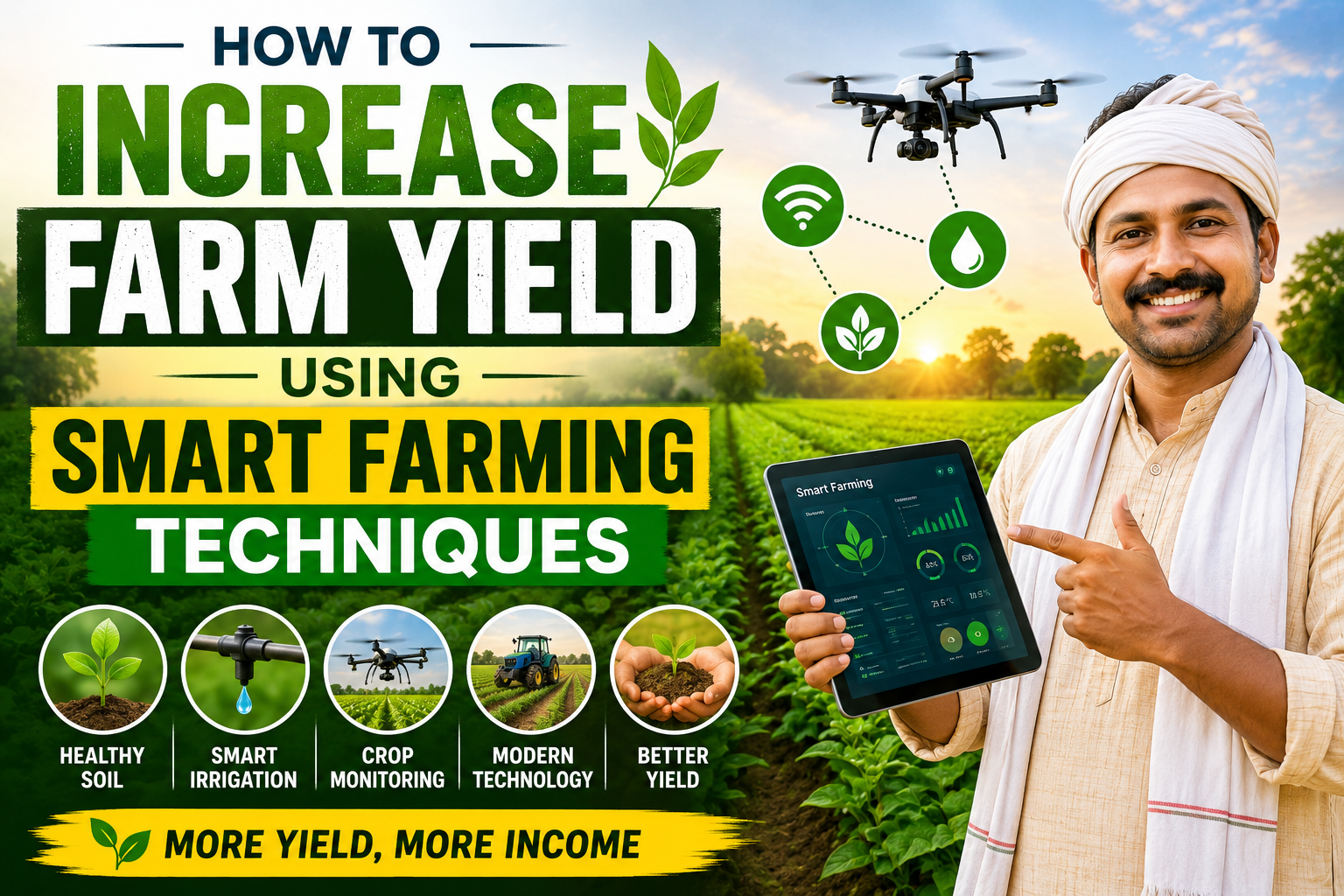
Increase farm yield with proven smart farming techniques. Learn how to improve crop productivity, reduce…